Dream Wish: A Practical Evaluation of the Cute and Bouncy Font Duo
In the landscape of digital typography, finding a typeface that balances aesthetic appeal with functional versatility is often a challenge. The Dream Wish font duo has emerged as a notable option for designers seeking a style that is simultaneously cute, bouncy, modern, and fun. This pairing offers a distinct combination of a single-line script with swash details and an all-caps bold sans-serif featuring ligatures. While the visual charm of Dream Wish is immediately apparent, potential users must evaluate whether its specific characteristics align with their project requirements before integrating it into a design workflow.
Understanding the Dream Wish Typography Pairing
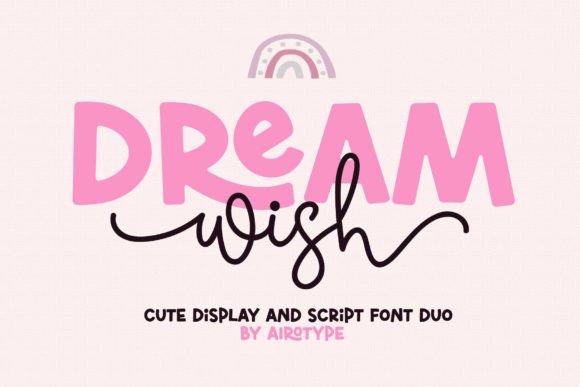
Dream Wish is not a single typeface but a coordinated system designed to work in harmony. The core of this duo lies in the contrast between two distinct styles. The first component is a single-line script font characterized by fluid strokes and decorative swashes. These swashes add a sense of movement and elegance, mimicking the natural flow of hand lettering while maintaining a consistent stroke width typical of modern brush scripts. The second component is an all-caps bold font. Unlike standard blocky headers, this companion typeface includes specific ligatures—special characters formed when two or more letters are joined together—to soften the rigid appearance of capital letters and introduce a playful texture.
The design philosophy behind Dream Wish prioritizes a "bouncy" quality. This refers to the baseline variations and the dynamic rhythm found in both the script and the bold caps. When used together, the script provides a whimsical, personal touch, while the bold caps offer structural stability and emphasis. However, the fonts are also engineered to function independently. Designers can deploy the script for body text in low-volume contexts or use the bold caps for impactful headlines without the need for the accompanying script.
Why Designers Are Considering Dream Wish
The interest in Dream Wish stems from a growing demand for typography that feels approachable yet contemporary. In an era where digital communication often relies on sterile, geometric sans-serifs, there is a market segment craving warmth and personality. Dream Wish addresses this by offering a modern interpretation of the "cute" aesthetic. It avoids the clichés of overly childish or dated bubble fonts, opting instead for a refined look that fits well within current design trends.
Furthermore, the inclusion of ligatures in the bold component is a significant draw for professionals looking to add subtle detail without increasing file complexity. Ligatures can improve the visual flow of text, preventing awkward spacing issues that often plague all-caps designs. For projects requiring a high degree of customization, the ability to mix and match these two styles allows for creative hierarchy without needing to source multiple third-party assets. The versatility of using the fonts separately or together reduces the friction of asset management, making Dream Wish an attractive option for streamlining the design process.
Benefits and Functional Advantages
- Cohesive Branding: Because the two fonts are designed as a pair, they share underlying proportions and stylistic DNA. This ensures that logos, social media graphics, and marketing materials maintain a unified visual identity.
- Emotional Resonance: The bouncy and fun nature of the typeface effectively communicates friendliness and creativity. This makes it particularly effective for brands targeting younger demographics or those in the lifestyle, education, and entertainment sectors.
- Design Flexibility: The single-line script is legible at larger sizes, while the bold caps provide strong anchors for headlines. The presence of swashes allows designers to create custom flourishes for initials or closing statements, adding a bespoke feel to mass-produced content.
Tradeoffs and Considerations
While Dream Wish offers distinct advantages, it is not a universal solution. Evaluating the tradeoffs is essential for making an informed decision. The primary limitation of any highly stylized font like Dream Wish is readability at small sizes. The intricate details of the script, particularly the swashes, can become indistinct or muddy when scaled down for mobile interfaces or fine print. Similarly, the all-caps bold font, while impactful, may suffer from reduced legibility if used for long paragraphs of body copy.
Another consideration is the context of usage. The "cute and bouncy" aesthetic, while modern, carries a specific tone. Using Dream Wish in formal, corporate, or serious contexts could undermine the message, creating a dissonance between the visual presentation and the intended gravity of the content. Designers must weigh the emotional impact of the font against the seriousness of the subject matter. Additionally, the reliance on ligatures means that the font requires careful kerning and layout planning; automated text wrapping might occasionally break ligature connections, requiring manual adjustment in certain software environments.
Ideal Use Cases for Dream Wish
Dream Wish is a strong fit for projects where personality and engagement are paramount. It excels in branding for children's products, toy companies, and educational platforms where a friendly, non-threatening voice is required. The playful nature of the font helps establish an immediate connection with the audience. Furthermore, it is well-suited for wedding invitations, party flyers, and event posters where the script's swashes can be utilized to create elegant, celebratory layouts.
In the digital space, Dream Wish works exceptionally well for blog headers, app icons, and social media story overlays. These applications typically involve short bursts of text where the font's unique character can shine without compromising readability. The bold caps are particularly effective for call-to-action buttons or promotional banners where attention-grabbing capability is the primary goal. When the goal is to convey excitement, joy, or a relaxed atmosphere, Dream Wish serves as an appropriate typographic vehicle.
When to Consider Alternatives
Despite its strengths, there are scenarios where alternatives to Dream Wish should be seriously considered. If the project involves dense blocks of text, such as e-books, reports, or news articles, a more neutral serif or sans-serif typeface would be more appropriate. The cognitive load required to read stylized script or heavy all-caps text increases significantly over long passages, potentially leading to reader fatigue.
Additionally, industries that rely on trust, authority, and precision—such as law, finance, or healthcare—may find the "fun" aspect of Dream Wish counterproductive. In these fields, a cleaner, more traditional typeface often reinforces credibility. If the design brief calls for minimalism or strict adherence to corporate guidelines that prioritize uniformity over flair, the decorative elements of Dream Wish, including its swashes and ligatures, might be seen as unnecessary distractions. Finally, for accessibility-focused projects, the high contrast and irregular shapes of the script may pose challenges for users with visual impairments, necessitating a switch to a more accessible font family.
Decision-Making Insights for Selection
To determine if Dream Wish aligns with your goals, begin by auditing the primary objective of your project. Ask whether the priority is to inform, persuade, or entertain. If entertainment and brand personality are the drivers, Dream Wish is a viable candidate. Next, conduct a legibility test. Mock up your design with actual content rather than placeholder text. Zoom out to simulate mobile viewing distances to ensure the script remains readable and the swashes do not clutter the layout.
Consider the longevity of the design. While trendy fonts capture attention quickly, they can date a brand faster than timeless classics. Evaluate whether the "bouncy" style of Dream Wish will still feel relevant in three to five years. Finally, assess the technical compatibility. Ensure that the software you use supports the specific ligatures and swash alternates included in the font files. By balancing aesthetic desire with practical constraints, you can decide if Dream Wish is the right tool for your specific design challenge.