Archdale Blackletter: A Practical Evaluation of a Modern Gothic Typeface
In the landscape of digital typography, few styles command as much immediate attention as the blackletter script. However, navigating this category often involves sifting through fonts that are either too archaic for modern screens or overly stylized to the point of illegibility. Archdale Blackletter emerges as a significant contender in this space, offering a stout, vintage-styled aesthetic that balances historic authenticity with contemporary utility. For designers, brand managers, and creators seeking a typeface steeped in gothic elegance without sacrificing readability, understanding the specific mechanics and applications of Archdale Blackletter is essential.
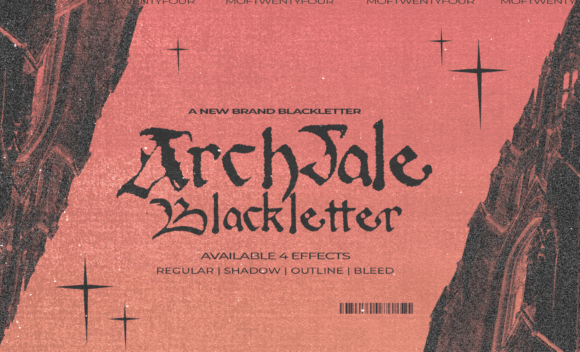
This evaluation explores the structural integrity, stylistic variations, and practical deployment of the font family. By examining its four distinct renditions—Regular, Outline, Shadow, and Bleed—we can determine where this typeface fits within a professional workflow and how it performs across various media.
The Design Philosophy: Bastarda Roots and Modern Execution
To appreciate Archdale Blackletter, one must first understand its lineage. The typeface takes its primary cues from historic bastarda scripts, a hybrid style that evolved during the 15th century by blending the angularity of Textura with the roundness of Cursive. This historical foundation provides the font with a natural rhythm and a sense of organic movement that purely geometric gothic fonts often lack.
Unlike many "blackletter" fonts found on free repositories, which frequently suffer from inconsistent stroke widths and erratic kerning, Archdale Blackletter demonstrates a high degree of typographic discipline. The characters are stout yet refined, maintaining a vertical stress that anchors the design while allowing for the characteristic flourishes of the genre. This approach ensures that the font feels authoritative and grounded rather than chaotic. The result is a typeface that honors the past but remains legible enough for modern headlines and branding elements.
Analyzing the Four Distinct Renditions
The versatility of Archdale Blackletter lies not just in its core design but in the variety of weights and effects included in the family. Each rendition serves a specific visual function, allowing users to create hierarchy and depth without relying solely on size changes.
- Regular: This is the workhorse of the family. It offers a solid, traditional presentation ideal for primary headlines and logotypes. The ink flow is consistent, making it reliable for both print and high-resolution digital displays. It captures the essence of tradition without appearing dated.
- Outline: The Outline version introduces a contemporary angle to the vintage script. By removing the fill, this style allows for creative layering. It is particularly effective when paired with bold background colors or textures, creating a striking contrast that draws the eye without overwhelming the composition.
- Shadow: Depth is a critical component of three-dimensional design. The Shadow rendition injects a subtle dimensionality into the text, lifting it off the page or screen. This effect is useful for book covers and album art where a tactile feel is desired, adding weight and presence to the typography.
- Bleed: Perhaps the most daring of the set, the Bleed style mimics the look of ink spreading on porous paper. It adds a raw, textured edge that suggests age and grit. While powerful, this style requires careful application, as it can reduce legibility if used at smaller sizes or on busy backgrounds.
Real-World Applications and Performance
The true test of any typeface is its performance in actual projects. Archdale Blackletter has been designed with an array of applications in mind, ranging from corporate branding to independent creative endeavors. Its robust structure makes it particularly well-suited for industries where heritage, strength, and exclusivity are key brand values.
Branding and Logotypes
For small business owners and entrepreneurs, a logo is often the first point of contact with a potential client. Archdale Blackletter works exceptionally well for brands in the craft beverage industry, such as breweries and distilleries, where the gothic aesthetic aligns naturally with themes of tradition and craftsmanship. Similarly, law firms, private clubs, and luxury real estate agencies can leverage the font's authority to project stability and prestige. The Regular and Outline versions are particularly effective here, as they scale well from business cards to large signage.
Fashion and Streetwear
The intersection of vintage aesthetics and modern street culture has created a demand for bold, graphic typography. Archdale Blackletter fits seamlessly into the streetwear sector. The Bleed and Shadow styles, in particular, resonate with the edgy, rebellious undertones often found in fashion graphics. When applied to t-shirts, hoodies, or packaging, the font conveys a sense of established cool that generic sans-serifs cannot achieve. The high contrast of the strokes ensures visibility even when printed on dark fabrics or distressed materials.
Publishing and Media
Book covers and album art require typography that can compete with complex imagery. In these contexts, Archdale Blackletter serves as a strong focal point. The Shadow variant is especially valuable for album covers in the metal, folk, or hip-hop genres, where the visual language often embraces darker, more textured themes. For book publishers, the font offers a way to signal genre immediately; a novel cover featuring this typeface instantly communicates mystery, history, or fantasy to the reader.
Usability and Technical Considerations
While the aesthetic appeal of Archdale Blackletter is evident, its technical usability is equally important for professionals. One common issue with decorative fonts is poor kerning—the spacing between letters—which can make text difficult to read. Archdale Blackletter addresses this with a carefully tuned spacing system that maintains clarity even at larger sizes. However, like all blackletter typefaces, it should be avoided for body copy. Its intricate details and dense stroke patterns make it unsuitable for paragraphs of text, where readability would quickly degrade.
Flexibility is another strength. The inclusion of multiple styles means that a designer does not need to manually apply drop shadows or outline effects in post-production software. This streamlines the workflow, saving time and ensuring consistency across different deliverables. Furthermore, the font files are generally optimized for standard vector formats, ensuring smooth rendering on web browsers and compatibility with major design suites.
Limitations and Strategic Recommendations
No typeface is a universal solution, and Archdale Blackletter has specific limitations that users must respect. The most significant constraint is legibility at small sizes. Due to the density of the strokes, the font loses definition when scaled down below 14 points. Therefore, it should be reserved strictly for headlines, titles, and short phrases. Attempting to use it for captions or fine print will result in a muddy, unreadable mess.
Additionally, the "Bleed" style, while visually striking, can clash with minimalist designs. It carries a heavy visual weight that demands a clean background or ample negative space to breathe. Using it in a crowded layout can lead to visual noise. Designers should also be mindful of cultural associations; while the font evokes elegance and history, it can sometimes carry unintended connotations depending on the context. It is crucial to pair it with appropriate imagery and color palettes to ensure the intended message is conveyed accurately.
Who Should Use Archdale Blackletter?
Archdale Blackletter is best suited for professionals who need to communicate a sense of timelessness and authority. It is an excellent choice for:
- Craft Brewers and Distillers: Who need to emphasize heritage and quality.
- Fashion Designers: Looking to infuse their collections with a vintage, urban edge.
- Authors and Publishers: Working in genres like historical fiction, fantasy, or thriller.
- Musicians and Producers: Creating album art that requires a bold, dramatic statement.
- Brand Identity Consultants: Developing logos for businesses that value tradition and exclusivity.
For freelancers and bloggers, this font offers a way to elevate content headers and featured images, providing a distinctive visual identity that stands out in a sea of generic web typography. However, it requires a deliberate hand; it is not a font to be used casually. When applied with intention and restraint, Archdale Blackletter becomes a powerful tool for capturing the magic of timeless design. It bridges the gap between the old world and the new, offering a classic, enduring aesthetic that remains relevant in today's fast-paced visual culture.