Homegrown: The Art of Authenticity in Digital Typography
In the evolving landscape of digital design, there is a distinct and growing appetite for imperfection. As screens become more ubiquitous and vector graphics achieve pixel-perfect precision, creators are increasingly seeking elements that feel human, tactile, and unpolished. This shift has given rise to a specific category of typography known as farmhouse handwriting fonts. Among these, Homegrown stands out not merely as a typeface, but as a stylistic bridge connecting the digital workspace with the warmth of analog craftsmanship. For professionals, hobbyists, and business owners alike, understanding the utility and aesthetic power of Homegrown offers a pathway to creating designs that resonate on an emotional level.
The Psychology of Handwritten Aesthetics
Before diving into the technical applications, it is essential to understand why a font like Homegrown captures the imagination. Typography is never just about legibility; it is about tone and subtext. When a viewer encounters a perfectly geometric sans-serif, they perceive efficiency and modernity. However, when they see a handwritten script with varying stroke widths and slight irregularities, the perception shifts immediately to intimacy and authenticity.
This psychological response is rooted in our innate recognition of human effort. A machine can replicate a letter shape a million times without variation, but a hand struggles, pauses, and accelerates. Homegrown mimics this struggle intentionally. It introduces the subtle quirks of a real pen on paper—the slight wobble in a loop, the variation in ink density, and the organic flow of a connected sentence. In marketing and personal branding, this "human touch" acts as a trust signal. It suggests that the message was crafted by a person who cares, rather than generated by an algorithm. For educators creating lesson plans or small business owners designing packaging, leveraging this psychological cue can significantly enhance engagement.
Defining the Farmhouse Style
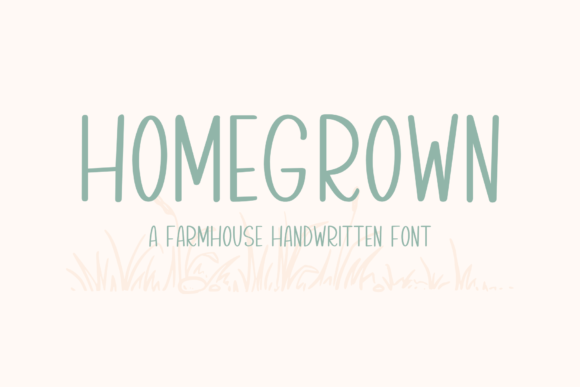
The term "farmhouse" in typography refers to a specific aesthetic movement that blends rustic charm with clean, readable lines. Unlike wild, illegible calligraphy, farmhouse fonts prioritize clarity while maintaining a casual demeanor. Homegrown fits squarely within this niche. It avoids the overly decorative flourishes that can hinder readability, opting instead for a friendly, approachable look. This makes it versatile enough for long-form text in invitations or bold headlines on signage. The style evokes images of country kitchens, wooden barns, and cozy living rooms, making it an ideal choice for brands and individuals wishing to project a sense of heritage, comfort, and down-to-earth values.
Practical Applications in Creative Workflows
The true value of a font like Homegrown is realized when applied to real-world projects. Its versatility allows it to transition seamlessly between digital mockups and physical production. One of the most prominent use cases is in the realm of DIY crafting, particularly with tools like Cricut machines and other die-cutting devices. These tools rely heavily on vector-based fonts that can be cut from vinyl, cardstock, or wood. Because Homegrown is designed with clean nodes and consistent spacing, it performs exceptionally well in these cutting workflows, ensuring that the final product retains its intended character without jagged edges or broken letters.
Rustic Signage and Home Decor
For interior designers and homeowners, the application of Homegrown extends to wall art and decorative signs. Imagine a wooden plank sign in a kitchen reading "Gather Here" or "Eat Fresh." Using a standard serif font might feel too formal, while a comic-style font would appear juvenile. Homegrown strikes the perfect balance, offering a rustic elegance that complements natural materials like reclaimed wood, wrought iron, and linen. The font's playful nature adds a layer of personality to the space, transforming a simple instruction into a warm invitation. This application is particularly effective for boutique hotels, cafes, and Airbnb hosts looking to create a unique, memorable atmosphere for their guests.
Personalized Stationery and Greeting Cards
In the world of stationery, the margin for error is slim. A greeting card must convey emotion instantly. Homegrown excels here by providing a visual texture that feels like a handwritten note. Whether it is a wedding invitation suite, a birthday card for a child, or a thank-you note for a client, the font infuses the message with sincerity. Designers often pair Homegrown with a clean sans-serif for body text, using the handwritten style exclusively for headers or salutations. This contrast creates a sophisticated layout that guides the eye while maintaining the core theme of warmth. For educators, this font is also invaluable for creating classroom posters, name tags, and certificates that feel welcoming to young students.
Technical Considerations for Professionals
While the aesthetic appeal is obvious, professionals must also consider the technical implementation of Homegrown. Like any high-quality digital asset, the font requires proper handling to ensure consistency across different platforms. When working in graphic design software such as Adobe Illustrator or Canva, users should pay attention to kerning and leading. Handwritten fonts often have irregular letter shapes that can cause spacing issues if left to default settings. Adjusting the tracking slightly can help maintain the illusion of natural writing without compromising legibility.
Furthermore, scalability is a key factor. While Homegrown looks charming at large sizes for banners and signs, it remains legible at smaller scales for labels and tags. However, designers should test the font at the smallest intended size before finalizing a print run. Some intricate loops in handwriting styles can blur when printed on certain textures, so a quick proof is always recommended. Additionally, for web developers integrating this style into digital interfaces, converting the font to web-optimized formats like WOFF2 ensures fast loading times without sacrificing the visual fidelity of the strokes.
Integration with Brand Identity
For business owners, incorporating Homegrown into a brand identity requires strategic thinking. It is not a one-size-fits-all solution. Brands that focus on luxury, high-tech innovation, or corporate finance may find the playful nature of the font incongruent with their messaging. However, for businesses in the food and beverage industry, artisanal goods, wellness sectors, and family-oriented services, Homegrown can serve as a powerful differentiator. It signals that the company values tradition, quality ingredients, or personal service. When used consistently across packaging, social media graphics, and website headers, it builds a cohesive narrative that customers can easily identify and connect with.
The Future of Authentic Typography
As we move further into an era dominated by artificial intelligence and automated content generation, the demand for authentic, human-centric design elements will only increase. Fonts like Homegrown represent a counter-movement to the sterile perfection of the digital age. They remind us of the value of the handmade, the imperfect, and the personal. Whether you are a professional designer curating a mood board, a teacher decorating a classroom, or a craft enthusiast cutting your first vinyl decal, the choice of typeface is a fundamental decision that shapes how your message is received.
The enduring popularity of the farmhouse aesthetic suggests that this trend is far from fleeting. It taps into a deep-seated desire for connection and simplicity. By embracing the characteristics of Homegrown, creators can add a layer of depth and emotion to their work that standard fonts simply cannot provide. It is more than just a tool for decoration; it is a medium for storytelling. In a crowded marketplace where attention is scarce, the ability to make a design feel warm, inviting, and genuinely human is a competitive advantage that cannot be overstated.
Final Thoughts on Versatility
Ultimately, the strength of Homegrown lies in its adaptability. It does not force a specific vibe upon the user but rather enhances the existing intent of the project. It can be whimsical for a children's book, elegant for a wedding menu, or rugged for a farm stand sign. This chameleon-like quality makes it a staple in the toolkit of any serious creator. As you explore your next creative endeavor, consider how the introduction of a handwritten element might transform the viewer's experience. Sometimes, the most impactful design choices are the ones that feel the least designed at all.