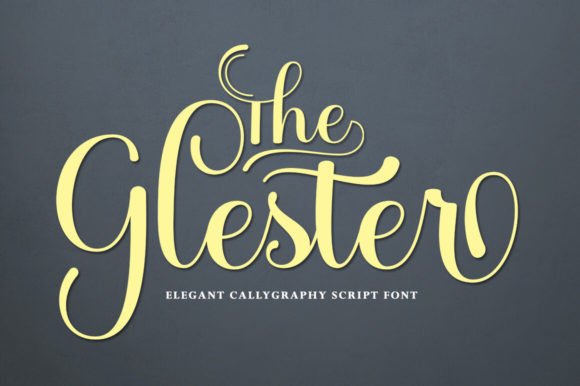
The Glester: Integrating a Modern Calligraphic Script into Professional Workflows
In the landscape of digital design, typography is often treated as a final polish rather than a foundational element of communication. However, for professionals who understand that visual hierarchy drives engagement, selecting the right typeface is a strategic decision. The Glester represents a significant evolution in this space. It is a calligraphic script font that combines exquisite character changes with the timeless appeal of classic decorative copperplate, yet it carries a distinct modern twist. Designed with high detail for an elegant style, The Glester is not merely an aesthetic choice; it is a tool that influences how messages are perceived, processed, and remembered by an audience.
For adults navigating complex creative or business workflows—whether you are a marketer crafting a campaign, an entrepreneur building a brand identity, or an educator designing course materials—the integration of a sophisticated script like The Glester requires a structured approach. This article explores how to position The Glester within your broader creative process, ensuring that its elegance translates into functional impact without compromising readability or brand consistency.
Defining the Role of The Glester in Visual Strategy
Before implementing any asset into a project, it is crucial to define its specific function. The Glester occupies a unique niche between traditional formal scripts and contemporary display fonts. Its "modern twist" on the copperplate style means it retains the flowing, connected strokes associated with high-end luxury but introduces cleaner terminals and adjusted spacing that improve legibility on digital screens. This distinction is vital for professionals working across multiple mediums, from print invitations to mobile app interfaces.
When planning a project, The Glester should be categorized as a display or accent typeface rather than a body text solution. In a workflow context, this means it is best deployed for headlines, logos, short quotes, or key data points where immediate visual impact is required. Understanding this limitation prevents common pitfalls such as using the font for long paragraphs, which can degrade user experience and reduce conversion rates. By assigning The Glester a specific role early in the planning phase, designers and content creators can maintain a clear visual hierarchy, allowing sans-serif or serif body fonts to handle the heavy lifting of information delivery while The Glester captures attention.
Pre-Project Preparation and Asset Compatibility
Successful implementation begins before the first pixel is placed. When considering The Glester for a new initiative, the preparation phase involves auditing current brand assets and technical requirements. Because The Glester is designed with high detail, file size and rendering performance become relevant factors, particularly for web-based projects. Professionals must ensure that their hosting environments or design software can render intricate ligatures and swashes without lag or distortion.
Compatibility testing is another essential step. While The Glester offers a modern twist, its roots in copperplate mean it pairs best with clean, geometric sans-serifs or traditional serifs that provide contrast. During the pre-production stage, teams should create a mood board or style guide that explicitly maps out these pairings. For example, pairing The Glester with a neutral Helvetica or Roboto creates a balance where the script feels elevated yet grounded. Conversely, pairing it with another ornate font can create visual noise, confusing the viewer and diluting the message. This organizational step ensures that when the execution phase begins, the team has a unified vision for how the font interacts with other design elements.
Integration During the Creative Execution Phase
Once the strategy is set, the execution phase is where The Glester's unique features come into play. The font comes with exquisite character changes, including alternate glyphs, swashes, and ligatures. These are not mere decorations; they are functional tools for guiding the reader's eye and adding personality to static layouts. In a practical workflow, designers should utilize these alternates selectively to break monotony in repetitive headers or to emphasize specific keywords in marketing copy.
Consider a workflow for a wedding planner or a luxury event organizer. When creating an invitation suite, The Glester can be used for the couple's names and the event title. The process involves selecting the primary glyph set for the main text and then manually inserting specific alternates for initials or connecting letters to create a seamless, hand-written feel. This manual adjustment requires patience but yields a result that looks bespoke rather than templated. Similarly, in branding for a boutique coffee shop, The Glester might be used for the logo mark. Here, the designer would experiment with the kerning and the flow of the script to ensure it remains legible at small sizes, such as on a cup sleeve or social media avatar.
Efficiency during this phase relies on familiarity with the font's OpenType features. Most modern design software allows users to access these alternates through dedicated menus or keyboard shortcuts. Learning these shortcuts reduces the time spent searching for characters, allowing the creative team to iterate faster. Furthermore, maintaining consistency is key. If a specific swash is chosen for a header in one document, that same treatment should be applied to all similar headers throughout the project to establish a cohesive visual rhythm.
Quality Control and Long-Term Usability
After the initial design is complete, the quality control phase becomes critical. The intricate details of The Glester can sometimes suffer when scaled down or converted to low-resolution formats. A robust review process involves checking the font at various sizes and on different devices. For digital campaigns, this means testing the font on mobile browsers to ensure the fine lines do not disappear or blur. For print projects, a proof check is necessary to verify that the ink density supports the thin strokes typical of copperplate styles.
Long-term usability also depends on how well The Glester fits into the organization's ongoing asset management system. Files containing the font should be properly tagged and stored alongside related brand guidelines. If the font is licensed for commercial use, tracking license compliance is part of the administrative workflow to avoid legal issues later. Additionally, as trends shift, the versatility of The Glester allows it to remain relevant. Its blend of classic and modern elements means it does not date quickly, making it a sustainable investment for brands looking to build a lasting identity.
Practical Workflow Examples Across Industries
To illustrate the versatility of The Glester, consider how it functions in three distinct professional scenarios:
- Marketing and Advertising: A digital marketer launching a premium skincare line uses The Glester for email subject lines and hero section headlines. The font's elegance signals quality immediately, increasing open rates. The workflow involves A/B testing the script against a standard serif to measure engagement, ultimately deciding on The Glester for the final campaign rollout due to higher click-through rates.
- Freelance Designers and Publishers: An independent publisher designing a cookbook uses The Glester for chapter titles and recipe names. The process involves setting up master pages in layout software where the font is automatically applied to specific paragraph styles. This ensures that every time a new chapter is added, the formatting remains consistent, saving hours of manual adjustment.
- Small Business Owners: A boutique florist updates their signage and packaging. They integrate The Glester into their logo and use it for handwritten-style notes included with bouquets. The workflow here is less about complex software and more about integrating the font into everyday communication tools, such as invoice templates and social media graphics, to reinforce a personal, artisanal brand image.
Optimizing Decision Making with The Glester
Deciding to incorporate a specialized font like The Glester is a strategic move that impacts the overall tone of a project. It signals a commitment to quality and attention to detail. However, this decision should never be made in isolation. It must align with the target audience's expectations and the medium's constraints. For instance, while The Glester works beautifully for a luxury real estate brochure, it might be inappropriate for a tech startup focused on rapid innovation, unless the goal is to subvert expectations deliberately.
The decision-making process should also involve stakeholder feedback. Presenting mockups with The Glester allows clients or team members to visualize the final outcome before resources are fully committed. This collaborative step helps manage expectations and ensures that the "elegant style" of the font resonates with the intended demographic. By treating the font selection as a deliberate phase in the project lifecycle, professionals can mitigate risks and maximize the return on their creative investments.
Conclusion: Elevating Output Through Strategic Typography
The Glester offers more than just a pretty look; it provides a mechanism for elevating the perceived value of content. By understanding its characteristics—exquisite character changes, a modern twist on copperplate, and high-detail construction—professionals can integrate it effectively into their workflows. From the initial planning stages of asset compatibility to the final quality checks of rendering and scalability, the successful use of The Glester hinges on discipline and strategic application.
Whether you are a freelancer managing multiple clients or an in-house team building a corporate identity, the principles of preparation, execution, and review remain constant. When applied correctly, The Glester transforms standard communications into memorable experiences, proving that in the world of design, the smallest details often yield the most significant results. By embedding this font into your toolkit with intention, you ensure that your work not only looks good but performs well in the competitive marketplace.