Script and Handwritten Bundle: A Practical Asset for Creative Workflows
In the landscape of digital design, typography often serves as the silent narrator of a brand's story. For professionals ranging from freelance graphic designers to small business owners managing their own marketing materials, the choice of typeface is rarely just about aesthetics; it is a strategic decision that influences readability, emotional resonance, and overall project cohesion. The Script and Handwritten Bundle addresses a specific need within this ecosystem by providing a curated collection of ten handwritten True-Type script fonts. This resource is designed not merely as a static library of characters but as a dynamic toolset intended to streamline the creative process and elevate everyday outputs into something truly spectacular.
Understanding where this bundle fits into a broader workflow requires looking beyond the initial download. It represents a foundational asset in the preparation phase of any visual communication project. Whether you are an educator creating engaging lesson plans, a marketer designing social media assets, or a publisher laying out a personal blog, having immediate access to high-quality, versatile scripts can significantly reduce the time spent searching for the perfect typographic voice. The efficiency gained here allows creators to focus more on content strategy and less on asset hunting.
Integrating Handwritten Typography into Your Design Process
The integration of the Script and Handwritten Bundle into your daily routine should be viewed as a methodical step in the production pipeline. Before diving into a new project, consider the role of typography in your hierarchy. While sans-serif and serif fonts often handle body text and structural elements, handwritten scripts excel at drawing attention to headlines, call-to-action buttons, and accent phrases. By incorporating these ten distinct styles early in the planning stage, you ensure that your visual identity remains consistent yet varied enough to maintain audience interest.
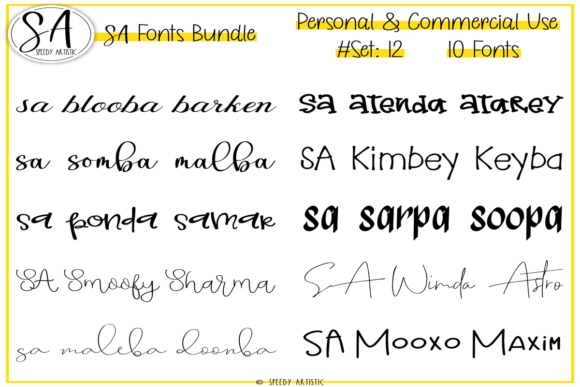
For instance, when preparing a marketing campaign, a designer might use a bold, playful script like SA Smoofy Sharma for a primary headline to evoke energy and approachability. Simultaneously, a more refined script such as SA Wimda Astro could be utilized for subheadings or testimonials to convey trust and sophistication. This deliberate selection process demonstrates how the bundle interacts with other design tools. In software like Adobe Illustrator, Canva, or Microsoft Word, these True-Type (TTF) files function seamlessly, allowing for kerning adjustments, scaling, and color manipulation without the loss of quality that often plagues lower-resolution web fonts.
During the execution phase of a project, the variety within the bundle becomes a critical problem-solving tool. One common challenge in design is avoiding visual monotony. When working on a series of related products—such as a set of educational worksheets or a monthly social media calendar—using the same font repeatedly can lead to audience fatigue. The inclusion of ten unique voices, from the whimsical SA Blooba Barken to the structured elegance of SA Ponda Samar, provides the flexibility needed to differentiate sections while maintaining a cohesive "handmade" aesthetic. This variety supports long-term consistency, ensuring that a brand does not look stale over months of content creation.
Optimizing Workflow Efficiency with TTF Compatibility
A key factor in the practical implementation of any font collection is technical compatibility. The Script and Handwritten Bundle utilizes the True-Type Font (TTF) format, which is universally supported across operating systems including Windows, macOS, and Linux. This universality removes a significant barrier to entry for collaborative teams. Unlike proprietary formats that may require specific software licenses or plugins, TTF files can be installed directly onto local machines or shared easily among team members without conversion issues.
From a productivity standpoint, this compatibility streamlines the handoff process between designers, copywriters, and developers. When a freelancer hands off a project to a client who needs to make minor edits, the assurance that the fonts will render correctly on their end prevents costly delays. Furthermore, for those using cloud-based design platforms, the ability to upload these TTF files ensures that custom typography remains accessible regardless of the device being used. This technical reliability is essential for maintaining momentum in fast-paced environments where deadlines are tight and resources are limited.
Efficiency also extends to file management and organization. With ten different fonts included, it is prudent to establish a naming convention and folder structure that aligns with your existing asset management system. Labeling projects according to the specific fonts used—for example, "Q4_Campaign_SA_Kimbey_Keyba"—can save valuable time during future revisions. This organizational discipline ensures that when a specific stylistic direction is needed for a rebrand or a seasonal update, the correct asset is immediately retrievable, minimizing downtime and maximizing output quality.
Strategic Use Cases Across Different Professions
The versatility of the Script and Handwritten Bundle makes it applicable across a wide spectrum of professional roles. For entrepreneurs launching a new product line, packaging design is a crucial touchpoint. Fonts like SA Maleba Doonba or SA Atenda Atarey can add a personal, artisanal touch to labels, distinguishing handmade goods from mass-produced competitors. In this context, the font acts as a branding vehicle, communicating values of authenticity and care before the consumer even reads the description.
Educators and instructional designers can leverage these scripts to create more engaging learning materials. Children respond well to handwriting-style fonts as they mimic the natural writing process, making worksheets and flashcards feel less rigid and more inviting. Similarly, adult education materials benefit from the warmth of scripts like SA Somba Malba, which can soften the tone of complex information and improve retention rates. The key is to balance legibility with style, ensuring that the chosen script does not compromise the clarity of the educational content.
Bloggers and content creators often struggle with standing out in saturated niches. Custom headers and pull quotes created with fonts like SA Sarpa Soopa or SA Mooxo Maxim can break up walls of text and guide the reader's eye through an article. These visual anchors increase dwell time and improve the overall user experience. Moreover, for YouTubers and video editors, overlaying these fonts on thumbnails and title cards adds a layer of personality that generic stock fonts cannot replicate, potentially increasing click-through rates.
Quality Control and Long-Term Asset Management
While the creative potential is vast, successful implementation requires a commitment to quality control. Not every script font is suitable for every application. Legibility is paramount, especially when text size is reduced for mobile screens or printed on small merchandise items. Before finalizing a design, it is essential to test the selected font from the Script and Handwritten Bundle at various sizes and resolutions. A font that looks stunning at 72 points may become illegible at 10 points. This testing phase is a non-negotiable step in the workflow to ensure professional standards are met.
Long-term use also involves monitoring trends and audience feedback. While handwritten fonts have enduring appeal, specific styles may date quickly if they align too closely with fleeting design fads. The strength of this bundle lies in its diversity; by rotating through the ten available options, creators can adapt their visual language to current trends without needing to purchase new assets constantly. This adaptability extends the lifecycle of the investment and keeps the brand fresh.
Furthermore, consider the interaction of these fonts with other visual elements such as imagery, color palettes, and layout grids. A heavy, textured script might clash with a minimalist background, whereas a thin, elegant script might get lost against a busy pattern. Understanding these interactions allows for more sophisticated design decisions. By treating the Script and Handwritten Bundle as a core component of a larger design system rather than an isolated decoration, professionals can achieve a level of polish that elevates their entire portfolio.
Ultimately, the value of this collection lies in its ability to transform routine tasks into opportunities for creative expression. Whether you are drafting a wedding invitation, designing a logo, or creating a presentation for stakeholders, having a reliable set of ten high-quality handwritten fonts empowers you to execute your vision with confidence. By integrating these tools thoughtfully into your planning, execution, and review phases, you ensure that every piece of content you produce is not only functional but also memorable and impactful.