Roadblock: A Strategic Typography Choice for Modern Branding
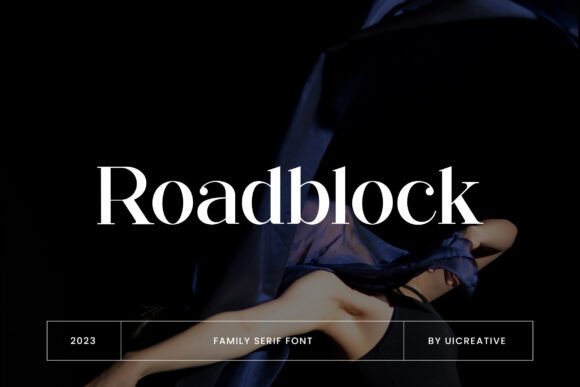
In the crowded landscape of digital and print media, the choice of typeface is rarely just an aesthetic decision; it is a strategic signal. Roadblock, specifically the Roadblock Modern Serif Family Font, represents a significant evolution in display typography. It bridges the gap between traditional elegance and contemporary boldness, offering a visual language that feels simultaneously beautiful, classy, and stylish. For entrepreneurs, marketers, and designers aiming to establish a distinct market position, understanding how to deploy Roadblock effectively can be the difference between a brand that blends in and one that commands attention.
The font's architecture is designed to handle high-impact scenarios with grace. Whether you are crafting a signature, designing stationery, or developing a logo, Roadblock provides a structural foundation that supports both masculine and feminine qualities. This duality makes it uniquely versatile for fashion-related branding, editorial design, and luxury product lines where the narrative requires sophistication without sacrificing modernity.
Understanding the Visual Strategy of Roadblock
To utilize Roadblock successfully, one must first understand its inherent character. Unlike standard serif fonts that often lean heavily into historical conventions, Roadblock Modern Serif introduces a refined edge. The strokes are deliberate, the contrast is managed to ensure readability even at larger sizes, and the overall silhouette exudes confidence. This makes it an ideal candidate for projects where the goal is to convey authority and refinement simultaneously.
Strategically, this font serves as a visual anchor. When applied to magazine or book covers, it immediately signals to the reader that the content within is curated and high-quality. In the context of website headers, Roadblock acts as a navigational beacon, guiding the user's eye while establishing the tone of the site before they read a single word of body copy. Its ability to function as a display font means it thrives in short bursts of text—titles, headlines, and taglines—where impact is more critical than prolonged legibility.
The "modern" aspect of the family is crucial. It allows brands to feel current without chasing fleeting trends. While many display fonts become dated quickly, Roadblock's balanced proportions suggest longevity. This is a vital consideration for long-term branding strategies where consistency over time is paramount. By choosing a font with such enduring appeal, businesses protect their visual identity from the rapid obsolescence that plagues trend-driven design.
Positioning Your Brand with Intentional Typography
For small business owners and freelancers, every element of your brand identity must work harder. Roadblock offers a solution for those who need to project a premium image without the overhead of extensive custom illustration. When used for logos, it provides immediate recognition. The sharp serifs and clean lines communicate precision and reliability, traits that are essential for professionals in law, finance, consulting, and creative direction.
Consider the application in wedding invitations and personal stationery. These are high-stakes communication pieces where the recipient forms an immediate impression based on the visual presentation. Roadblock elevates these documents from simple notifications to keepsakes. The font's elegant structure suggests that the event or the sender values tradition but understands modern aesthetics. This nuance is powerful in positioning a brand or individual as someone who appreciates detail and quality.
In the realm of fashion, the balance between masculine and feminine qualities found in Roadblock is particularly advantageous. Fashion branding often struggles to appeal to a broad audience without appearing generic. Roadblock allows for a fluid expression of style. A menswear line can use it to convey rugged sophistication, while a womenswear collection can leverage it for timeless chic. This adaptability reduces the need for multiple typefaces, streamlining the brand's visual system and ensuring cohesive messaging across different product lines.
Key Applications for Maximum Impact
- Editorial Design: Use Roadblock for feature titles and pull quotes to break up dense text and add visual interest.
- Luxury Packaging: Apply the font to labels and boxes to elevate perceived value and justify premium pricing.
- Digital Headers: Implement Roadblock in website navigation and hero sections to create a strong first impression.
- Typography Quotes: Leverage the font's dramatic flair for social media graphics and motivational posters.
- Personal Branding: Utilize the font in signatures and LinkedIn banners to project professional authority.
Planning for Long-Term Results
Adopting Roadblock should not be a random act of decoration; it requires planning. Before integrating this font into your workflow, consider the broader ecosystem of your brand. Does Roadblock complement your existing color palette? Does it harmonize with the secondary typefaces you use for body text? Strategic typography relies on hierarchy. If Roadblock is used for headlines, your body text must be chosen to provide sufficient contrast without competing for attention.
Productivity in design often comes from having a limited, well-chosen toolkit. By committing to Roadblock as a primary display font, you reduce decision fatigue. You no longer need to search for the perfect title font for every new project. Instead, you develop a consistent voice that your audience learns to recognize. Over time, this consistency builds trust. Customers begin to associate the specific look of Roadblock with the quality and reliability of your offerings.
Furthermore, thinking about scalability is essential. A font that looks great on a billboard must also translate well to a mobile screen. Roadblock's design considerations account for various viewing distances and resolutions. However, it is the designer's responsibility to test these applications. Ensure that the kerning and leading are adjusted appropriately for each medium. What works for a printed magazine cover may require modification for a responsive web header. This attention to detail is what separates amateur execution from professional results.
Navigating Risks and Avoiding Common Pitfalls
Despite its versatility, Roadblock is not a universal solution. There are risks associated with using any display font without clear goals. The most common pitfall is overuse. Because Roadblock is so striking, there is a temptation to apply it to too much text. Display fonts are designed for brevity. Using Roadblock for paragraphs or long-form content will likely result in poor readability and visual clutter. This undermines the very elegance the font is meant to convey.
Another risk lies in context mismatch. While Roadblock excels in fashion, luxury, and editorial contexts, it may feel out of place in industries that prioritize utilitarianism or extreme minimalism. For example, a technical software manual or a safety instruction sheet would benefit from a more neutral sans-serif font. Misapplying Roadblock in such scenarios can confuse the audience and dilute the message. Always ask: does this font support the core objective of the communication?
There is also the danger of relying solely on the font to carry the weight of the brand. Typography is only one component of a successful identity. If the underlying product, service, or content lacks quality, no amount of elegant typography will sustain the brand. Roadblock amplifies what is already there; it does not fix fundamental flaws. Therefore, ensure that your strategy includes robust content and a clear value proposition alongside your visual choices.
Decision-Making Framework for Implementation
To integrate Roadblock effectively, adopt a structured approach. Begin by defining the emotional response you wish to elicit. Do you want your audience to feel inspired, secure, or intrigued? Roadblock is best suited for evoking feelings of sophistication and confidence. If your goal aligns with these emotions, proceed to the next step: testing.
Create mockups that simulate real-world usage. Place the font on actual product packaging, visualize it on a mobile device, and print it on paper to check texture and ink absorption. Observe how it interacts with other design elements. Does it clash with your imagery? Does it overpower the logo? These practical tests reveal issues that theoretical planning might miss.
Finally, establish guidelines for your team or clients. Document when to use Roadblock, what weights are appropriate, and what pairings work best. This ensures that everyone involved in the brand's communication maintains a consistent standard. By treating Roadblock as a strategic asset rather than just a file to download, you maximize its potential to drive engagement and reinforce your market position.
Ultimately, the power of Roadblock lies in its intentional application. It is a tool for those who understand that design is a form of communication. When used with foresight and discipline, this modern serif family can transform ordinary projects into memorable experiences, supporting long-term growth and establishing a legacy of style and substance.