Handfine: Elevating Your Designs with a Modern Script Font
In the crowded landscape of digital and print design, the choice of typography often dictates whether a project resonates or fades into the background. Handfine has emerged as a standout option for those seeking a clean, stylish, and elegant script font that balances modern aesthetics with timeless appeal. Whether you are crafting a high-end magazine cover, designing a boutique logo, or creating an eye-catching poster, this typeface offers the versatility needed to make your creative ideas stand out. However, simply downloading a beautiful font does not guarantee a successful design. To truly leverage the potential of Handfine, creators must understand its nuances, avoid common pitfalls, and apply it with intention.
Understanding the Appeal of Handfine
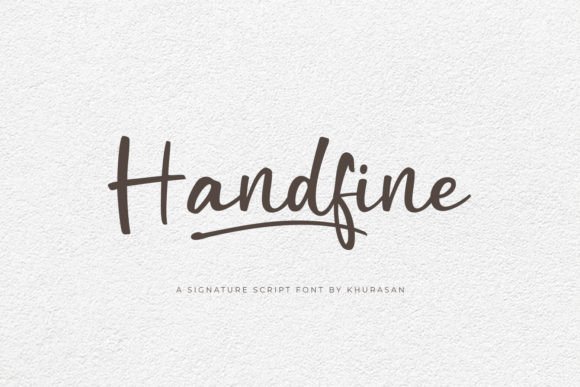
Handfine is more than just a collection of curves and strokes; it is a tool designed to communicate sophistication and approachability simultaneously. Its structure mimics natural handwriting while maintaining the consistency required for professional applications. This makes it particularly effective for brands that want to feel personal yet polished. From wedding invitations to luxury product packaging, the font's fluidity adds a human touch that rigid sans-serif fonts often lack. The reason many designers gravitate toward Handfine is its ability to adapt. It can be the focal point of a minimalist banner or a subtle accent in a complex layout without overpowering other elements.
Despite its elegance, the font requires careful handling. A common misconception is that script fonts like Handfine are universally applicable to every text-heavy section of a document. In reality, their decorative nature means they shine best when used sparingly. Understanding where Handfine fits within your visual hierarchy is the first step toward mastering it.
Common Mistakes When Choosing Script Fonts
One of the most frequent errors beginners make is assuming that all script fonts serve the same purpose. While Handfine is incredibly versatile, it is not a catch-all solution. Selecting it for a long-form body paragraph, such as the terms and conditions on a website or a dense article in a newsletter, will result in poor readability. The intricate details of the script style can cause reader fatigue when stretched over large blocks of text. This mistake directly impacts user experience and communication efficiency, potentially causing your audience to disengage before absorbing your message.
Another overlooked detail is the pairing of fonts. Handfine demands a complementary partner to balance its flourish. Pairing it with another decorative or highly stylized font creates visual chaos, making the design look cluttered and unprofessional. Instead, the goal should be contrast. A clean, geometric sans-serif or a sturdy serif font works wonders alongside Handfine, allowing the script to take center stage while the secondary font handles the informational load.
The Trap of Overusing Flourishes
Many designers fall into the trap of overusing the decorative swashes and ligatures available in script fonts like Handfine. While these features add character, using them indiscriminately can make a design look messy. For instance, applying a dramatic tail to every capital letter in a headline might seem impressive initially, but it often disrupts the baseline alignment and creates uneven spacing. This affects the overall presentation, making the layout appear amateurish rather than intentional.
To avoid this, treat flourishes as accents rather than defaults. Use them to highlight specific words or initials that need extra emphasis. Restraint is key to maintaining the "clean" and "modern" qualities that define Handfine. By limiting the use of these decorative elements, you ensure that the font remains legible and the design retains its sophisticated edge.
Evaluating Usability and Technical Compatibility
Before committing to Handfine for a major project, it is crucial to evaluate its technical specifications. A common oversight is failing to check the character set and language support. If you are working on a multilingual project or a brand that operates internationally, ensure that the version of Handfine you download includes the necessary glyphs for your target languages. Using a font that lacks specific characters can lead to broken layouts and missing symbols, which undermines the professionalism of your work.
Additionally, consider the weight and size limitations. Script fonts often lose their definition when scaled down too small. Handfine, with its delicate strokes, may become indistinguishable at sizes below 10 points in print or 14 pixels on a screen. Always test the font at the actual size it will be displayed. If the fine lines disappear or the letters merge together, the font is not suitable for that specific application. Ignoring this detail can lead to costly reprints or redesigns later in the process.
Strategic Application for Maximum Impact
To get the most out of Handfine, adopt a strategic approach to its application. Start by defining the mood you wish to convey. Is it romantic, corporate, playful, or luxurious? Handfine leans towards the elegant and modern, making it ideal for lifestyle brands, creative portfolios, and editorial designs. Once the mood is established, use the font to reinforce that identity consistently across all touchpoints.
A practical example of effective usage involves a logo design for a high-end coffee shop. Instead of using Handfine for the entire menu, a designer might use it exclusively for the brand name in the logo and on the header of the menu. The rest of the text—item descriptions and prices—would be rendered in a simple, readable sans-serif. This combination ensures the brand feels unique and inviting without sacrificing clarity. The result is a cohesive visual identity that communicates quality and attention to detail.
Furthermore, consider the context of your medium. On a digital banner, Handfine can draw immediate attention due to its distinct shape. However, in a dark mode interface, the thin strokes might struggle against the background. Adjusting the stroke width or adding a subtle shadow effect can enhance visibility without altering the font's inherent style. These small adjustments demonstrate a deep understanding of how typography interacts with different environments.
What to Check Before You Buy or Download
Before finalizing your decision to acquire Handfine, perform a thorough evaluation. First, review the license agreement carefully. Are you purchasing a personal license or a commercial one? Using a font commercially without the proper license can lead to legal issues and fines, which is a risk no business owner should take. Ensure the license covers your intended use, whether it's for web embedding, app development, or print advertising.
Secondly, inspect the sample files provided by the creator. Look for consistency in the letterforms. Do the lowercase 'a' and 'b' share a similar rhythm? Is the spacing between letters uniform? High-quality fonts like Handfine should exhibit meticulous attention to kerning and spacing. If the samples show irregularities, it may indicate a lower-quality production that could hinder your design workflow.
Finally, test the font in your own software environment. Sometimes, a font looks perfect in a previewer but behaves differently in Adobe Illustrator, Photoshop, or Canva. Check how it renders, how easily you can manipulate it, and if any special characters are missing from your system. Taking these steps ensures that when you integrate Handfine into your projects, it performs exactly as expected, saving you time and frustration.
Conclusion: Making the Right Choice
Handfine represents a powerful opportunity to elevate your designs with a touch of modern elegance. By avoiding common mistakes such as overuse, poor pairing, and neglecting technical requirements, you can harness its full potential. Remember that great typography is not just about choosing a pretty font; it is about making thoughtful decisions that enhance communication and aesthetics. With careful planning and a focus on usability, Handfine can transform your posters, logos, magazines, and banners into memorable experiences that resonate with your audience.