Evaluating Extra Corn for Modern Design Projects
In the landscape of digital typography, script fonts serve a unique function, bridging the gap between formal communication and personal expression. Extra Corn has emerged as a notable option within this category, characterized by its modern aesthetic and approachable, "cute" style. For designers, marketers, and content creators, selecting the right typeface is a critical decision that influences readability, brand perception, and overall visual hierarchy. This evaluation examines what Extra Corn offers, where it fits best within a design system, and the practical considerations involved in integrating it into various projects.
Understanding the Aesthetic of Extra Corn
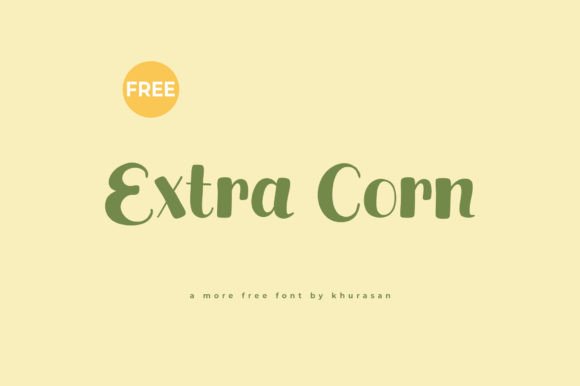
At its core, Extra Corn is a display script font designed to mimic the fluidity of hand-lettering while maintaining the consistency required for digital and print applications. Unlike traditional calligraphy which often relies on dramatic contrast between thick and thin strokes, Extra Corn adopts a more uniform weight. This characteristic contributes to its modern feel, making it appear less ornate and more playful. The rounded terminals and soft curves are deliberate design choices intended to evoke friendliness and warmth.
The font's structure allows it to function effectively as a headline element rather than a body text solution. Its letterforms are distinct enough to stand out in large sizes but cohesive enough to create a unified word shape when used in short phrases. When evaluating a font like Extra Corn, it is essential to understand that its primary value lies in its ability to inject personality into a layout without overwhelming the viewer with excessive decoration.
Primary Use Cases and Applications
The versatility of Extra Corn makes it suitable for a variety of specific design contexts. Because of its legible yet stylized nature, it performs well in scenarios where the goal is to capture attention quickly. Common applications include:
- Posters and Event Flyers: The playful nature of the font works exceptionally well for casual events, workshops, or community gatherings where a welcoming tone is desired.
- Logos and Branding: For startups or small businesses in sectors like food and beverage, lifestyle, or children's products, Extra Corn can provide a memorable mark that distinguishes the brand from corporate competitors.
- Magazine Covers and Book Titles: In editorial design, the font serves as an effective cover title, particularly for genres such as romance, self-help, or light fiction, where the typography needs to suggest a narrative tone.
- Banners and Social Media Graphics: Digital marketing materials often require bold, readable text that conveys emotion. Extra Corn's clear forms ensure that messages remain visible even when scaled down for mobile screens.
Benefits and Strategic Advantages
Choosing Extra Corn offers several strategic advantages for designers looking to enhance their creative output. The most significant benefit is its immediate emotional resonance. Typography is not merely about conveying information; it is about setting a mood. Extra Corn succeeds in establishing a lighthearted and inviting atmosphere, which can be crucial for brands aiming to build a connection with their audience.
Furthermore, the font's modern interpretation of the script genre ensures it does not feel dated. Many script fonts rely on Victorian-era flourishes that can clash with contemporary minimalist designs. Extra Corn avoids this pitfall, allowing it to sit comfortably alongside sans-serif body fonts and clean geometric layouts. This compatibility expands the range of projects where the font can be utilized without creating visual dissonance.
From a workflow perspective, the clarity of the character set means that kerning adjustments are often minimal. Designers can frequently use default spacing settings, which streamlines the production process for tight deadlines. This efficiency is a practical consideration for agencies or freelancers managing multiple clients simultaneously.
Tradeoffs and Limitations
While Extra Corn is a powerful tool for specific applications, it is not a universal solution. Understanding its limitations is just as important as recognizing its strengths. The primary tradeoff is readability at small sizes. As a display script, the intricate curves and connected letters can become difficult to decipher when used for body copy or captions below 14 points. Attempting to use it for long-form text will likely result in reader fatigue and a decline in engagement.
Additionally, the "cute" aesthetic may not align with every brand identity. Industries that prioritize authority, seriousness, or high-tech innovation—such as finance, law, or cybersecurity—may find the font too informal. In these contexts, the playful nature of Extra Corn could undermine the credibility of the message. It is also worth noting that script fonts generally have lower accessibility scores compared to standard sans-serif or serif fonts, which should be considered when designing for inclusive audiences.
Situations for Alternatives
There are specific scenarios where exploring alternatives to Extra Corn is advisable. If a project requires a font that conveys luxury, elegance, or historical gravitas, a high-contrast calligraphic script or a classic serif might be more appropriate. Similarly, if the design brief demands extreme versatility across all text weights and lengths, a variable sans-serif family would offer greater utility.
Designers working on technical documentation or educational materials should also look elsewhere. Clarity and neutrality are paramount in these fields, and the decorative elements of Extra Corn would distract from the content. Furthermore, if the target demographic is strictly professional or B2B, a more neutral typeface might resonate better than one perceived as whimsical.
Practical Decision-Making Insights
To determine if Extra Corn aligns with your specific goals, consider the following evaluation framework:
- Define the Tone: Does the project require a friendly, approachable, or youthful voice? If yes, Extra Corn is a strong candidate. If the tone needs to be authoritative or serious, reconsider.
- Assess Hierarchy: Will the font be used primarily for headlines and short accents? If you plan to use it for paragraphs, it is likely not the right choice.
- Test Pairings: Script fonts rarely work alone. Evaluate how Extra Corn pairs with a neutral sans-serif or slab serif. A successful pairing creates balance, where the script provides the personality and the secondary font ensures readability.
- Check Legibility: Mock up the design in both print and digital formats. Zoom out to see how the text holds up on a mobile device. If the letters blur together, the font size is too small for this typeface.
Ultimately, the decision to incorporate Extra Corn should be driven by the specific communication goals of the project. It is an asset for designs that need to stand out through charm and modern flair, but it requires careful application to avoid diminishing the professionalism of the final product. By weighing these factors, designers can make informed choices that enhance their work and meet the expectations of their audience.