Evaluating Davello: A Modern Serif for Sophisticated Design
In the vast landscape of digital typography, finding a font that balances historical elegance with contemporary functionality is a common challenge for designers. Davello emerges as a compelling option in this space, positioning itself as a simple serif typeface that merges classic structural integrity with modern stylistic sensibilities. For professionals and enthusiasts alike, understanding whether Davello aligns with specific project requirements involves looking beyond its aesthetic appeal to consider its legibility, versatility, and practical application across various media.
Understanding the Design Philosophy of Davello
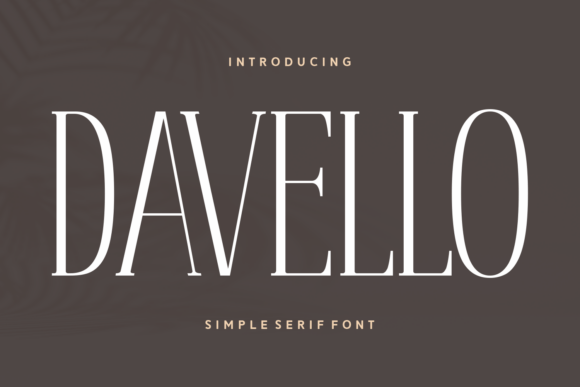
Davello is fundamentally a transitional serif font, characterized by clean lines and elegant curves that define its visual identity. Unlike traditional serifs that may feel heavy or overly ornate, Davello strips away unnecessary decoration to focus on clarity and readability. The design prioritizes open apertures and consistent stroke weights, ensuring that characters remain distinct even at smaller sizes. This approach makes it particularly effective for body text where sustained reading is required, while still maintaining enough character to serve as a display font for headlines.
The "simple" descriptor often associated with Davello does not imply a lack of depth; rather, it suggests a refined minimalism. The font retains the essential features of the serif family—the small decorative strokes at the ends of letters—yet executes them with a modern precision that feels fresh on screens and crisp in print. This duality allows Davello to bridge the gap between the warmth of traditional typography and the sleekness of modern interface design.
Key Reasons to Consider Davello for Your Projects
Designers often turn to Davello when they need a typeface that conveys sophistication without overwhelming the content. Several factors contribute to its growing popularity among those evaluating their typographic options:
- Versatility Across Media: Davello performs reliably in both print and digital environments. Its screen-optimized rendering ensures that the elegant curves do not blur on low-resolution displays, while its high contrast ratios make it ideal for high-quality offset printing.
- Enhanced Readability: The clean lines and well-proportioned letterforms reduce eye strain during long reading sessions. This makes it an excellent candidate for editorial layouts, blogs, and documentation where user retention depends on ease of reading.
- Aesthetic Neutrality: While stylish, Davello does not impose a strong personality that might clash with brand imagery. It acts as a supportive element, allowing the content and other design components to take center stage.
- Modern Elegance: For brands seeking to update their visual identity to appear more current while retaining a sense of heritage, Davello offers a subtle transition from older, heavier serifs to lighter, airier designs.
Benefits, Tradeoffs, and Practical Considerations
While Davello offers significant advantages, a balanced evaluation requires acknowledging potential tradeoffs. Every typeface has limitations based on its design constraints, and understanding these helps in making informed decisions.
The Benefits of Simplicity
The primary benefit of Davello lies in its adaptability. Because it avoids extreme stylistic flourishes, it integrates seamlessly into diverse design systems. Whether used for a luxury fashion brochure or a tech startup's website, the font maintains its integrity. The elegant curves provide a touch of class that sans-serif fonts often struggle to achieve, adding a layer of refinement that can elevate the perceived value of a product or service.
Potential Tradeoffs
However, the very simplicity that defines Davello can be a limitation in certain contexts. In projects requiring high drama or bold statement-making, Davello might feel too restrained. Its moderate contrast and standard x-height mean it may not stand out as aggressively as a blackletter or a high-contrast display serif. Additionally, if a project demands extensive language support or complex ligatures, users should verify the specific character set included in the Davello package, as simpler fonts sometimes offer fewer alternate glyphs compared to comprehensive professional families.
Expectations for Performance
When implementing Davello, designers should expect smooth performance at standard web-safe sizes (16px and above). However, like many serif fonts, pushing it to extremely small sizes (below 10px) in dense data tables or footnotes might result in some loss of detail due to the delicate nature of the serifs. Testing the font in the actual production environment is crucial to ensure that the elegant curves render correctly on all target devices.
Ideal Scenarios for Using Davello
Davello is a strong fit for projects where the goal is to communicate trust, quality, and clarity. Specific situations where this font excels include:
- Editorial and Publishing: Magazines, books, and long-form articles benefit from Davello's readability and sophisticated tone. It guides the reader through text without distraction.
- Corporate Branding: Law firms, financial institutions, and consulting agencies often require a font that looks established yet forward-thinking. Davello strikes this balance effectively.
- Luxury Packaging: Product labels for cosmetics, wines, or artisanal goods can leverage Davello's elegant curves to suggest premium quality.
- Web Interfaces: Content-heavy websites, such as news portals or educational platforms, gain from the font's legibility and modern aesthetic.
When to Consider Alternatives
Despite its strengths, Davello may not be the optimal choice for every design brief. There are scenarios where alternative typefaces might better serve the project's goals:
- High-Impact Headlines: If the design requires massive, attention-grabbing headlines that dominate the layout, a bolder display serif or a geometric sans-serif might provide the necessary visual weight.
- Playful or Youthful Brands: Companies targeting a younger demographic with a fun, energetic brand voice might find Davello too formal. Script fonts or rounded sans-serifs could offer a more appropriate tone.
- Technical Documentation: While readable, Davello's serif features might be less suitable for code snippets or highly technical manuals where monospaced fonts or neutral sans-serifs are industry standards.
- Low-Bandwidth Environments: If the project involves embedding custom fonts on sites with strict bandwidth limitations, a system font stack using standard serifs might be a more practical solution than loading a custom file.
Practical Decision-Making Insights
Deciding whether to adopt Davello ultimately depends on aligning the font's characteristics with your specific project objectives. Before finalizing your selection, consider conducting a comparative test. Place Davello alongside other contenders in your shortlist within your actual design mockups. Observe how the font behaves in different weights and sizes, and pay attention to how it interacts with your color palette and imagery.
Ask yourself critical questions: Does the font enhance the message or distract from it? Is the level of sophistication appropriate for the target audience? Will the font remain effective as the brand evolves over time? By focusing on these functional aspects rather than just initial visual appeal, you can determine if Davello is the right tool for the job.
In conclusion, Davello represents a thoughtful synthesis of tradition and modernity. It offers a reliable, elegant solution for designers seeking to add a touch of sophistication to their work without sacrificing readability. While it may not be the universal answer for every typographic need, its balanced design makes it a worthy contender for a wide range of professional applications. Careful evaluation of your specific requirements will reveal whether Davello is the perfect match for your next project.